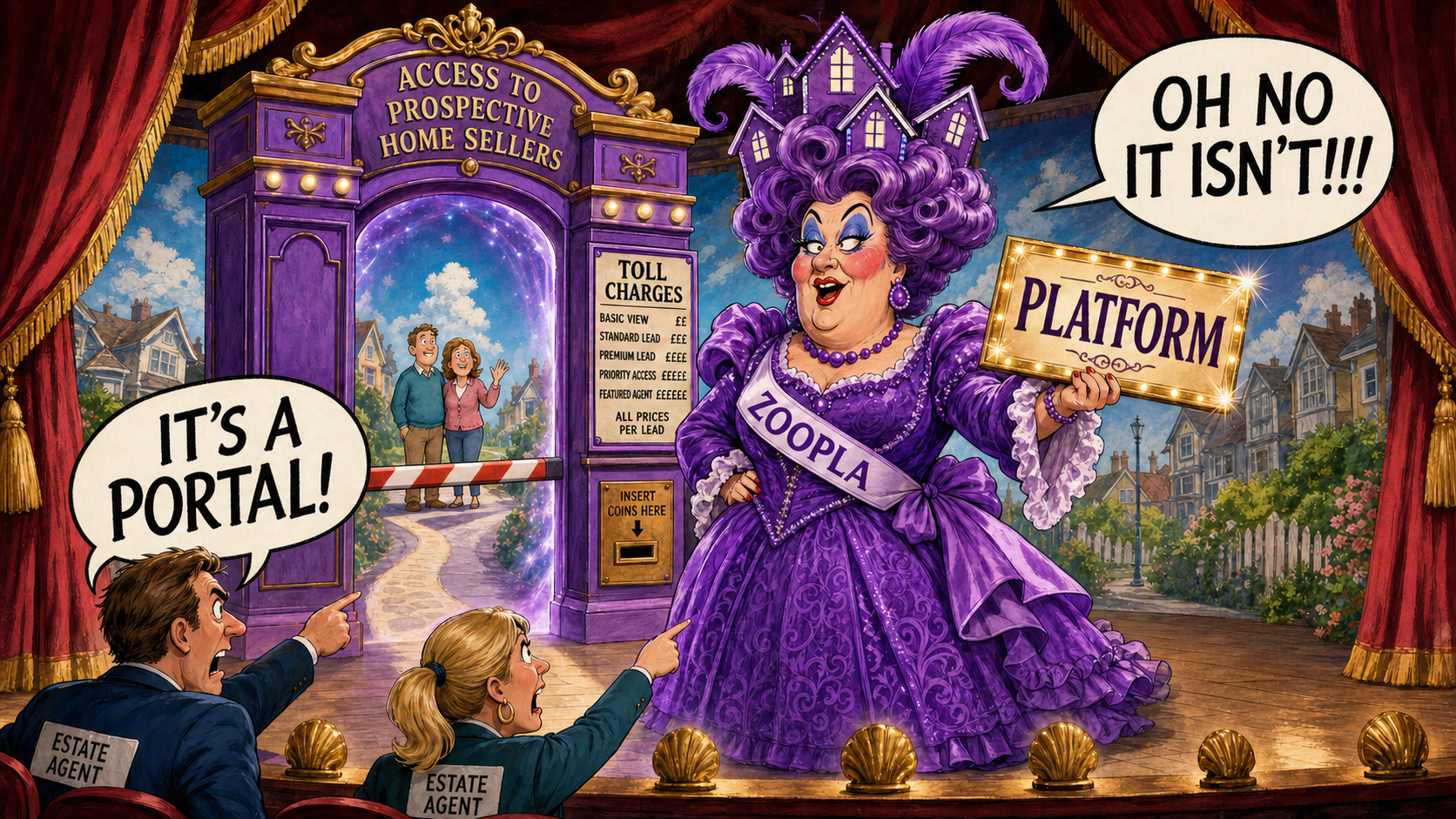
Zoopla has decided the word “portal” is now a bit … common. Back in May it announced it was no longer merely a portal, but “a different kind of property platform built on direct consumer relationships”. This week, it helpfully explained what that actually means in the only language that really matters: your monthly fee.
On Thursday, Zoopla revealed its first proper re-jig of agent membership packages in seven years. Three tiers - Listing, Instruction and Complete - priced by agency size, local market, and (this is the tell) how well Zoopla performs in your patch. That last bit is being presented as fairness. It’s also something else: price discrimination with a smile, justified by “outcomes”, and tailored so precisely that two branches ten miles apart can be paying different sums for the same badge and the same promise.
If you’re tempted to dismiss it as semantics and packaging, don’t. The numbers underneath are the plot.
Zoopla says it now has more than 6 million homeowners tracking the value of their home on-platform - up 39% in a year, doubled in two. It says valuation leads to agents grew 32% year-on-year. And it claims Prospect Plus converts 43% of those valuation leads into a listing within 12 months.
There are a few questions you’d want to ask before you build next year’s business plan on those figures (conversion definitions, attribution, what “listing” means in a world of multi-agency and withdrawn instructions - and whether “within 12 months” is doing a significant amount of heavy lifting). But even if you haircut the numbers, the direction of travel is crystal clear: Zoopla has been building a direct relationship with your future vendors years before they ring anyone - and it’s now selling you access back at the top tier of a shiny new menu.
Why the pivot now? Two reasons.
First, being “just a portal” is a grim business when Rightmove hoovers up the lion’s share of consumer attention - and attention is the only currency that makes the listings model feel inevitable. If you can’t win the consumer browsing war, you stop fighting it head-on and you change the terrain.
Second, AI is quietly dissolving the search box itself. Zoopla’s enterprise deal with OpenAI in April - and its “Just Ask Zoopla” positioning - is a bet that consumers will increasingly converse rather than scroll. If buyers stop browsing pages of listings, the listings inventory stops being the prize. The homeowner relationship becomes that instead: intent signals, timing cues, life-stage inference and the ability to nudge.
The timing, too, is rather theatrical. Rightmove’s FTSE 100 relegation last month, plus the looming 29 July deadline to file its defence to the £1.5bn competition claim over fees, makes “portal-land” feel less like a settled oligopoly and more like a market everyone is nervously re-drawing in real time. CoStar is pumping OnTheMarket. Zoopla is going over agents’ heads to the homeowner. Rightmove is lawyering up. Same stage, different scripts.
So what does it mean for agents? The battleground has shifted from listings to instructions. Portals used to compete for buyers and sell you the leads; now they’re competing for vendors - the only thing that is, was, and always will be the lifeblood of an agency.
Zoopla will say this is good for you. CEO Paul Whitehead says one in three SME customers upgraded within six months, and that lead volumes on new packages are up 23%. Plenty of agents will do that deal for cheap, particularly if it replaces a chunk of flaky manual prospecting with something measurable.
But you should ask the one question Zoopla would prefer stayed unspoken: if a platform owns the homeowner relationship, tracks their value monthly, predicts their likely propensity to move, and nudges them at the moment of maximum intent … who is the agent in that transaction - and who is the fulfilment partner?
Zoopla’s right about one thing: it’s not just a portal anymore. On that, at least, we can all agree.