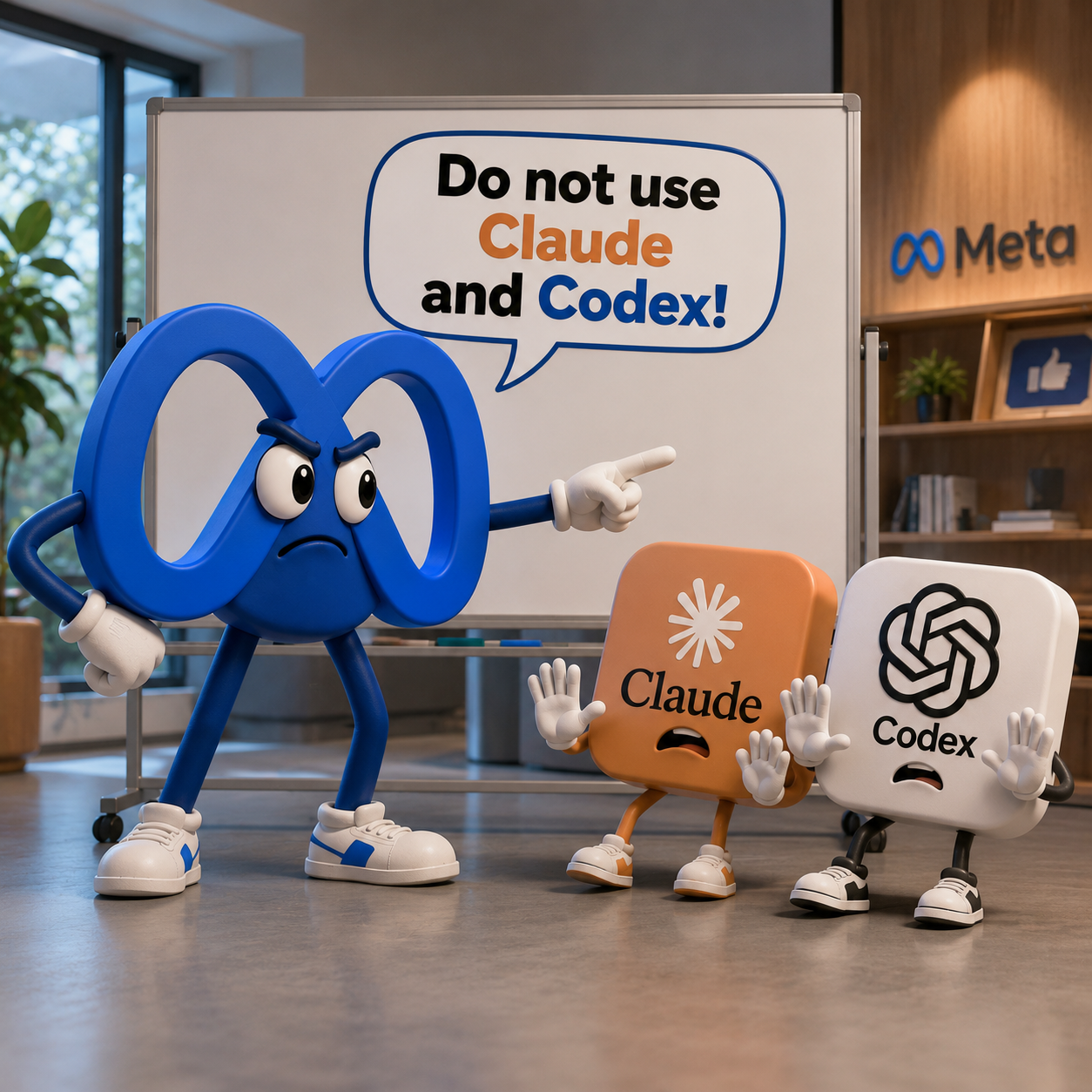
In the ever-evolving AI landscape, Meta Platforms has taken a bold step by barring its engineers from using Anthropic’s Claude and OpenAI’s Codex. This move aims to prevent the sneaky issue of 'model distillation,' where rival AI models might inadvertently teach Meta’s own models their proprietary tricks.
Imagine this: Meta’s engineers using Claude or Codex to whip up some code magic, only for that magic to seep into Meta’s own AI training pipelines. It’s like borrowing your neighbour’s secret recipe and accidentally making it your signature dish! Not only does this create an intellectual property pickle, but it also risks breaching service agreements with Anthropic and OpenAI.
To tackle this, Meta has laid down the law: no more external AI tools for coding tasks, human oversight on workflows, and a thorough cleanse of any previous outputs. Before this clampdown, the use of these tools was through the roof, with Meta’s “Claudeonomics” dashboard reporting a whopping 60 trillion tokens consumed in just 30 days!
Joining the club, Microsoft also decided to ditch most of its Claude Code licenses, citing excessive token consumption as the culprit. It seems the AI giants are playing it safe, ensuring their models remain homegrown and free from any external influences.
In this thrilling AI arms race, it’s all about keeping your cards close to your chest—or in this case, your code!
Want to hear more? Join Mal & Matt on the Property AI Report Podcast each week!
Access from your preferred podcast provider by clicking here
Made with TRUST_AI - see the Charter: https://www.modelprop.co.uk/trust-ai